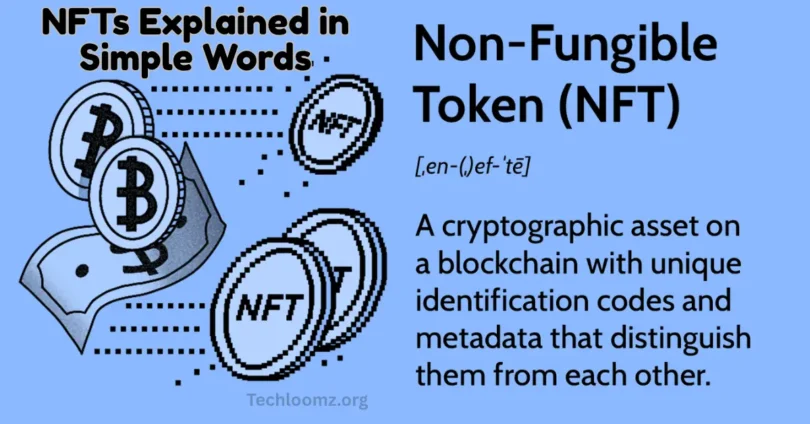
NFTs Explained in Simple Words, NFTs, or Non-Fungible Tokens, are a type of digital asset that shows ownership of something unique online. Unlike regular money or cryptocurrencies, each NFT is one-of-a-kind and cannot be replaced with another. People use NFTs to buy, sell, and collect digital art, music, videos, and even virtual items in games. In simple words, NFTs are like special digital collectibles that you truly own.
What Does NFT Stand For?
NFT stands for Non-Fungible Token. “Non-Fungible” means that it is unique and cannot be replaced with anything else, unlike regular money or Bitcoin. Each NFT has its own special value and identity on the blockchain. This uniqueness is what makes NFTs different from other digital files, like pictures or songs, which can be copied easily. In simple words, owning an NFT is like having a digital certificate that proves you own something special online.
You May also Visit this Link: Latest Tech Updates You Need to Know
How NFTs Work
NFTs may sound complicated, but they work in simple steps anyone can understand.
- Creation (Minting): Digital content like art, music, or videos is turned into an NFT on the blockchain.
- Ownership: Once minted, the NFT is recorded with a unique ID showing who owns it.
- Buying & Selling: NFTs can be bought or sold on marketplaces like OpenSea or Rarible.
- Transfer: Ownership can be transferred to someone else securely using blockchain technology.
- Verification: Each NFT has proof of authenticity, making it unique and hard to duplicate.
NFTs work by combining digital content with blockchain to create a unique, verifiable asset online.
Types of NFTs
NFTs come in many forms, each serving a different purpose for collectors, artists, and gamers.
- Digital Art: The most popular type, digital art NFTs include paintings, illustrations, and graphic designs. These are bought and sold online, often for high prices, because each piece is unique.
- Music NFTs: Musicians create NFTs of songs or albums, allowing fans to own a special copy of their work. Some even include extra benefits, like backstage passes or exclusive content.
- Video Clips & GIFs: Short videos or animated clips, like famous sports highlights or viral moments, can be minted as NFTs and collected by fans.
- Virtual Items in Games: Many online games now let players buy NFTs of skins, weapons, or characters. Owning these gives players exclusive in-game advantages or rare items.
- Virtual Real Estate: In virtual worlds or the metaverse, people buy digital land or buildings as NFTs, which can be used, sold, or rented.
- Collectibles: Digital trading cards, badges, and other collectibles are NFTs that are popular for fun or investment.
Each type of NFT is unique, and their value comes from ownership, rarity, and demand. Collectors can choose the type that fits their interest, whether it’s art, music, gaming, or virtual property.
Why People Buy NFTs
People buy NFTs for many reasons, and understanding them can help beginners see why these digital assets are so popular.
- Collectibles and Ownership: NFTs give people the chance to own unique digital items like art, music, or collectibles. This sense of ownership makes NFTs special.
- Investment Opportunities: Many buyers see NFTs as an investment, hoping their value will increase over time so they can sell for a profit.
- Supporting Artists and Creators: By buying NFTs, fans directly support artists, musicians, and creators, giving them recognition and revenue.
- Digital Identity and Status: Owning rare or famous NFTs can act as a status symbol in online communities or social media.
- Access and Rewards: Some NFTs provide extra benefits, like event tickets, exclusive content, or virtual experiences.
People buy NFTs because they are unique, valuable, and can connect buyers directly with creators in the digital world.
You May also Visit this Link: Social Media Trends to Watch
How to Create Your Own NFT
Creating your own NFT may seem tricky, but it can be done in simple steps even by beginners.
- Choose Your Digital Content: Decide what you want to turn into an NFT. It could be digital art, music, video clips, or even virtual collectibles.
- Pick an NFT Platform: Select a platform like OpenSea, Rarible, or Mintable where you can mint your NFT. These platforms make the process easier for beginners.
- Set Up a Crypto Wallet: Create a cryptocurrency wallet (like MetaMask) and fund it with Ethereum or the platform’s required currency. This wallet will hold your NFT and handle transactions.
- Mint the NFT: Upload your digital file on the platform and follow the steps to mint it. “Minting” is the process of turning your file into a unique NFT recorded on the blockchain.
- Add Details: Give your NFT a title, description, and set any special properties or royalties. Royalties allow you to earn money every time your NFT is resold.
- Publish and Share: Once minted, your NFT is live on the marketplace. Share it on social media or communities to attract potential buyers.
Creating an NFT is all about turning your digital creativity into a unique asset that can be bought, sold, and owned online.
How to Buy and Sell NFTs
Buying and selling NFTs is simple once you know the steps. Here’s how beginners can do it safely.
- Set Up a Crypto Wallet: Create a digital wallet like MetaMask or Coinbase Wallet to store cryptocurrencies and NFTs securely.
- Fund Your Wallet: Add cryptocurrency (usually Ethereum) to your wallet, which will be used to buy NFTs.
- Choose a Marketplace: Visit NFT marketplaces like OpenSea, Rarible, or NBA Top Shot to browse and select NFTs.
- Buying NFTs:
- Select the NFT you want.
- Click “Buy” and confirm the transaction from your wallet.
- Once completed, the NFT appears in your wallet.
- Selling NFTs:
- List your NFT on a marketplace.
- Set a price or auction terms.
- When someone buys it, the platform transfers the NFT to the buyer and funds to your wallet.
- Stay Safe: Always verify the NFT and creator to avoid scams. Avoid deals that seem too good to be true.
Buying and selling NFTs is about setting up your wallet, using marketplaces, and trading safely while keeping your digital assets secure.
NFT Marketplaces You Should Know
NFT marketplaces are online platforms where people can buy, sell, and trade NFTs. Choosing the right marketplace is important, especially for beginners.
- OpenSea: The largest NFT marketplace, perfect for digital art, collectibles, and gaming items. Easy for beginners with a wide range of NFTs.
- Rarible: A popular platform where creators can mint and sell NFTs directly. It offers customizable options and supports multiple types of digital assets.
- NBA Top Shot: Focused on sports highlights, especially basketball. Collectors can buy and sell officially licensed video clips as NFTs.
- Mintable: Simple platform for creating and selling NFTs, with a user-friendly interface suitable for beginners.
- Foundation: A marketplace for digital art where creators can auction their work. Known for high-quality artwork and limited editions.
Each marketplace has unique features, so beginners should explore and pick one that fits their interest, whether it’s art, gaming, or sports collectibles.
NFTs in Gaming and Virtual Worlds
NFTs are changing the way people play games and interact in virtual worlds.
- Virtual Items: Players can buy NFTs of in-game items like skins, weapons, or characters. Owning these NFTs gives players exclusive features or rare items that others cannot have.
- Trading and Selling: Gamers can trade or sell their NFTs on marketplaces, creating real-world value from virtual achievements.
- Virtual Real Estate: In virtual worlds like Decentraland or The Sandbox, people buy land or buildings as NFTs. These properties can be developed, sold, or rented.
- Gaming Communities: NFTs create new social and economic systems in online games, where players truly own their digital assets instead of just using them temporarily.
- Earning Opportunities: Some games allow players to earn NFTs as rewards for achievements, which can then be sold for cryptocurrency.
NFTs in gaming and virtual worlds give players ownership, trade opportunities, and rewards, making gaming more interactive and valuable.
Famous NFT Stories
Some NFTs have become extremely famous and valuable, showing how big the digital collectibles market has grown.
- Beeple’s Digital Artwork: The digital artwork “Everydays: The First 5000 Days” by Beeple sold for over $69 million, making headlines worldwide.
- CryptoPunks: These are 10,000 unique pixel characters. Some rare CryptoPunks have sold for millions, becoming status symbols in the NFT community.
- Bored Ape Yacht Club (BAYC): This collection of cartoon apes became very popular, with celebrities buying them for hundreds of thousands of dollars. Owning one gives membership to exclusive events.
- NFT Music Releases: Artists like Kings of Leon released albums as NFTs, offering fans special editions and extra perks along with the music.
- Sports Highlights: NBA Top Shot sold digital basketball highlights as NFTs, some reaching hundreds of thousands of dollars, creating a new way for fans to collect moments.
These stories show that NFTs can be valuable, collectible, and culturally significant, attracting artists, gamers, and investors worldwide.
Future of NFTs
NFTs are still new, but they are growing fast and shaping the future of digital ownership.
- Music and Entertainment: More musicians, filmmakers, and creators are expected to release NFTs, giving fans exclusive content and experiences.
- Virtual Real Estate Expansion: Virtual worlds and metaverses will continue to grow, with NFTs representing land, buildings, and other digital assets.
- AI-Generated NFTs: Artificial intelligence is creating unique digital art and collectibles, which can also be minted as NFTs.
- Integration with Social Media: Platforms may allow users to showcase NFT ownership, turning them into a part of online identity and social status.
- Mainstream Adoption: As NFTs become easier to create and trade, more people and businesses may adopt them for collectibles, investments, or digital access.
The future of NFTs is bright and expanding, offering new opportunities in art, gaming, music, and online communities.
You May also Visit this Link: Beginner is Guide to Crypto Trading
Benefits of NFTs
NFTs offer several advantages for creators, collectors, and investors, making them unique in the digital world.
| Proof of Ownership: NFTs provide secure proof of ownership for digital assets, showing that you truly own a unique item. |
| Support for Creators: Buying NFTs directly supports artists, musicians, and content creators, giving them revenue and recognition. |
| Investment Opportunities: Some NFTs increase in value over time, allowing owners to buy low and sell high. |
| Transparency and Security: Blockchain technology ensures that NFT transactions are transparent, verifiable, and secure. |
| Access and Perks: Certain NFTs offer extra benefits, such as event tickets, exclusive content, or membership rewards. |
| Digital Collectibles: NFTs allow people to collect unique items online, similar to trading cards or limited-edition merchandise. |
Common FAQs About NFTs
Here are the most common questions about NFTs, answered in simple words.
Can NFTs be copied?
The digital file itself can be copied, but the NFT proves who actually owns the original version.
Do I need cryptocurrency to buy NFTs?
Yes, most NFT platforms require cryptocurrency, usually Ethereum, to complete purchases.
Can NFTs lose value?
Yes, NFT prices can go up or down depending on demand, rarity, and market trends.
Are NFTs environmentally harmful?
Some NFTs use energy-intensive blockchains, but platforms are moving to eco-friendly solutions.
Can anyone create an NFT?
Yes, anyone can mint an NFT, but quality and uniqueness affect its popularity and value.
Do NFTs guarantee profit?
No, owning an NFT does not guarantee financial gain. Value depends on market interest.
Can I use NFT content commercially?
Usually, owning an NFT does not give full copyright; commercial use depends on the creator’s terms.
Are NFTs only for art and collectibles?
No, NFTs are expanding to gaming, virtual real estate, music, and online experiences.
How do I store NFTs safely?
NFTs are stored in a digital wallet, and keeping private keys secure is essential to prevent loss or theft.
Will NFTs replace traditional ownership?
Not entirely, but NFTs provide a new way to prove ownership and value in the digital world.
Conclusion
NFTs are digital assets that give people unique ownership of art, music, videos, and virtual items. They offer new opportunities for creators, collectors, and gamers while showing how digital content can have real-world value. By understanding NFTs, beginners can explore, create, and trade safely in the growing digital world.
Written By: Techloomz